
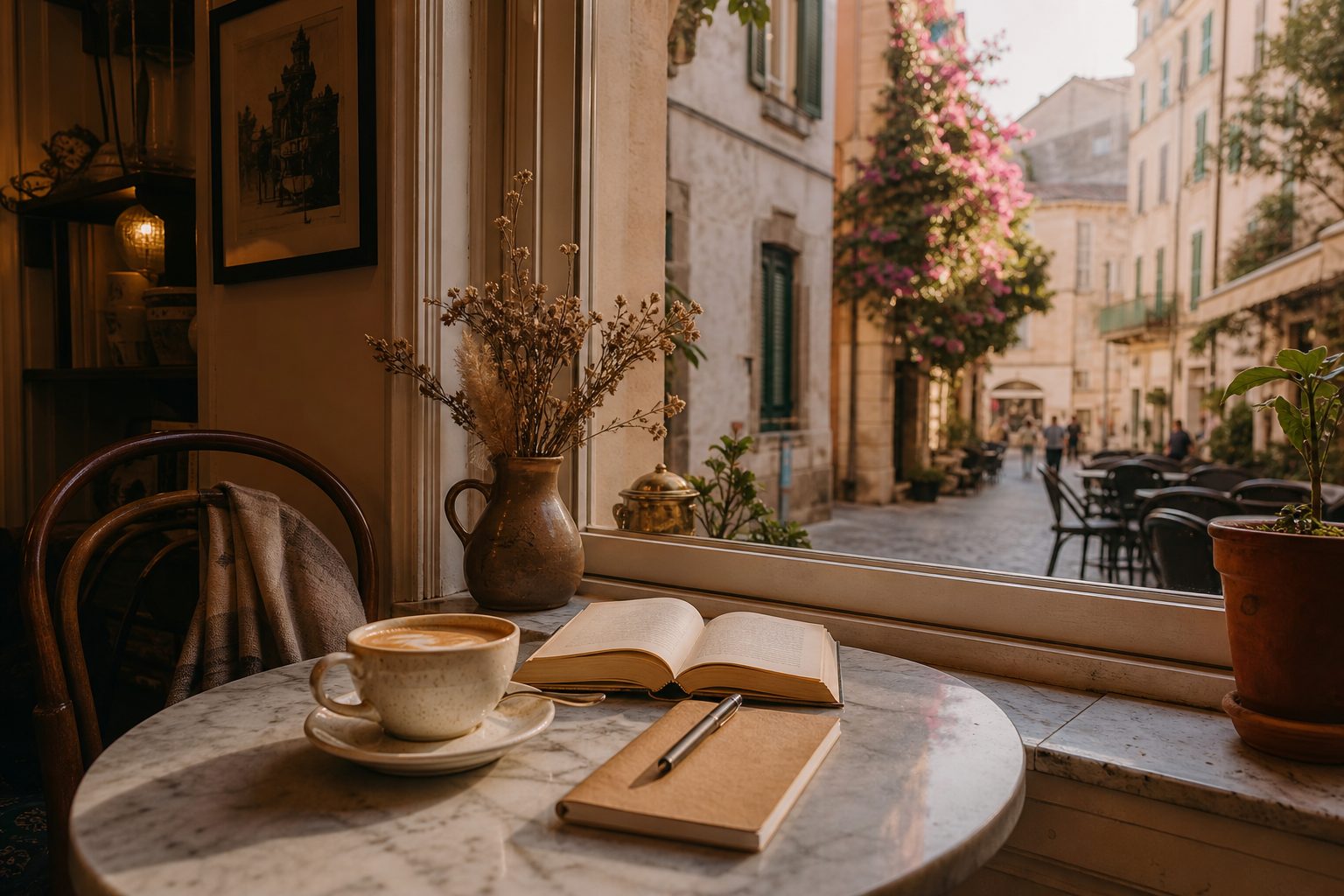
There's an unspoken rule in travel culture that you should always be going somewhere new. New countries, new stamps, a longer list. To return to a place you've already "done" can feel like a small failure of imagination — why go back when there's a whole unseen world out there? I used to believe this completely. I don't any more. Some of the richest travel I've ever done has been the second, third and fourth time to a place I already loved, and I want to make the unfashionable case for going back.
Because here's what I've found: a place doesn't really begin to reveal itself until you stop treating it like a checklist. The first visit is all surface — the famous sights, the orientation, the slightly anxious business of figuring out how things work. It's only on the return that you can relax enough to actually see.
The first visit is a sketch; the return is the painting
On a first trip, so much energy goes into logistics. Where's the station, how does the bus work, which way is the river, did I overpay for that. You're learning the grammar of a place. You can't be present in the way you'd like because part of you is always navigating. The return changes everything. You arrive already knowing the shape of things, and all that freed-up attention goes straight into noticing. The light on a particular wall. The rhythm of a neighbourhood. The café you loved, now reliably yours.
You become a regular, and that changes how you're treated
My favourite thing about returning is the slow shift from tourist to familiar face. The second time I walked into a certain little bar abroad, the owner squinted, then beamed — he remembered me. By the third visit there was a glass poured before I'd sat down. That's not a transaction you can buy on a first trip, no matter how much you spend. It's earned only by coming back, and it transforms a place from a destination into something closer to a relationship. I have these quiet little belongings now in a handful of cities, and they're worth more to me than a dozen new passport stamps.
Going back in a different season, or a different life
A place also changes, and so do you. I've returned to cities in winter that I first met in summer and found them almost unrecognisable — quieter, moodier, more themselves. I've gone back to a town years later as a different person and read it completely differently. Returning isn't repetition; it's a new conversation with an old friend who's also changed. You're never really stepping into the same river twice, even when the street is exactly where you left it.
How I make a return trip count
- Skip the greatest hits. You've seen them. Use the time for the streets and corners you missed.
- Go back to your places — the café, the bench, the bar — and let yourself become a regular.
- Change one variable: a different season, a different neighbourhood to stay in, a different pace.
- Go deeper, not wider. One museum properly beats five rushed. One day trip you skipped last time.
- Let it be slow. The whole point of a return is that you've nothing left to prove.
What returning has taught me
That depth is its own kind of adventure. We treat novelty as the only real travel currency, but knowing one place deeply — its seasons, its moods, its people who now know your face — is a richness the endless-new approach never quite reaches. I'll always chase new horizons; the diaries on this site are proof. But I've made my peace with going back, and back again, to the handful of places that feel like mine. They've given me more, each time, than the first visit ever could. The unseen world will wait. Some of it, I've decided, is worth seeing twice.

Writer and slow traveler based in Columbus, Ohio. I document the road one honest entry at a time — no sponsors, no affiliate links, just how it actually went.
More from the notebook
 Reflections
Coming home: the part no one talks about
On the tender comedown after a trip.
 Portugal
A week in Portugal that rearranged how I travel
Where my slow-travel habit really began.