
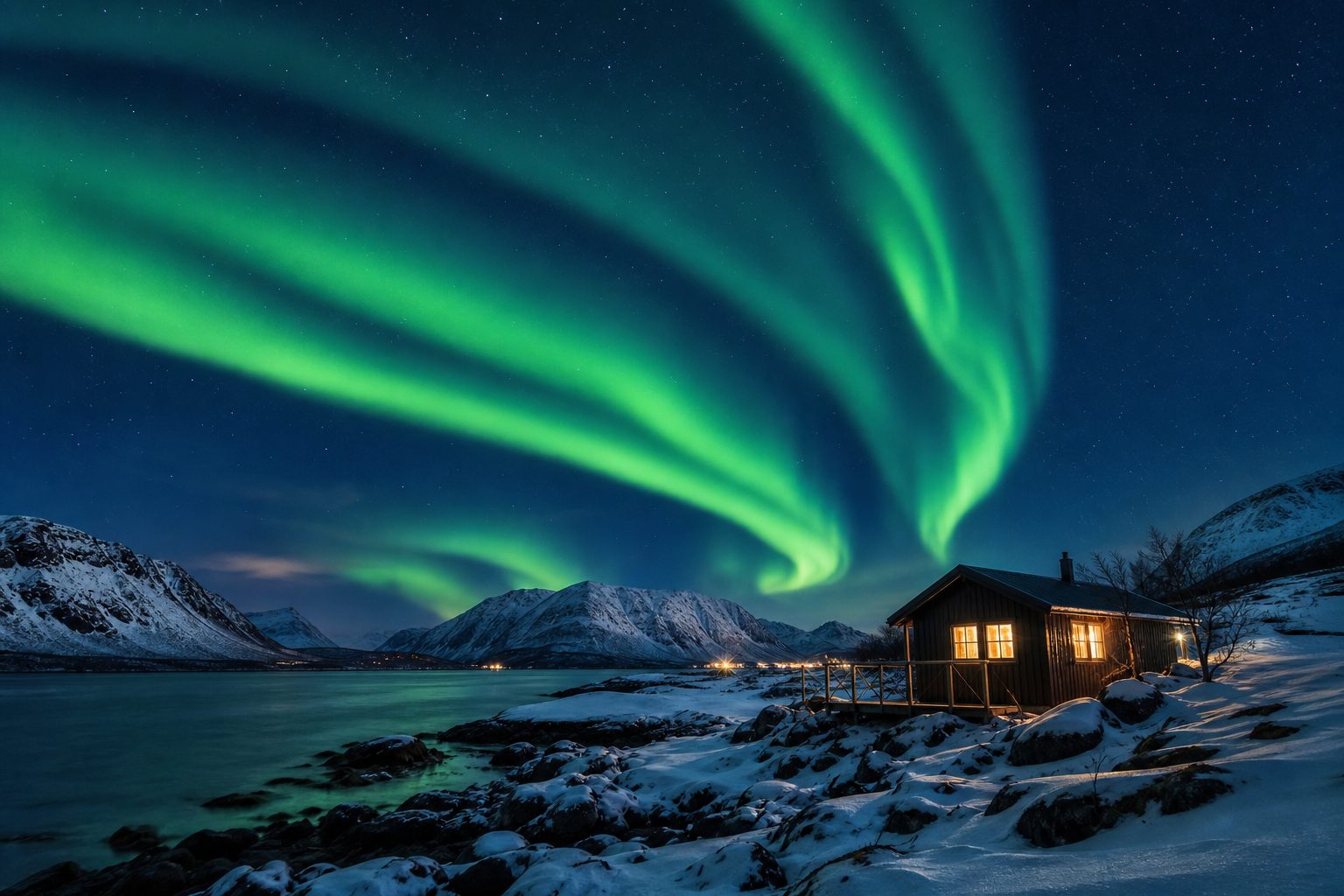
Here is the thing the dreamy photographs never tell you about the northern lights: most of chasing them is just standing in the dark, very cold, staring at a sky that is stubbornly doing nothing. I want to be honest about that, because the disappointment of two empty nights is exactly what made the third one undo me completely. You can't have the magic without the waiting. I learned that the hard way, somewhere above the Arctic Circle, unable to feel my toes.
I'd flown to northern Norway in January with one item on the list, the kind of bucket-list item I'd half-believed I would never actually tick. I'd read enough to know there were no guarantees — the aurora is weather and solar luck and patience, not a scheduled show. I told myself I'd be fine if I didn't see it. I was lying.
Night one: nothing
The first night, we drove out of the town's light, set up in the snow, and waited. And waited. The cold was a different species of cold than I'd ever met — it got into my bones and made a home there. The sky stayed black. After three hours we gave up, and I lay awake feeling foolish for having pinned so much hope on something so far outside anyone's control.
Night two was the same, with the added insult of cloud. I started doing the maths on my remaining chances and not liking the answer. This, I think, is the part people skip when they tell the story afterward — the genuine fear that you've come all this way, spent all this money and feeling, and the sky simply won't oblige.
Night three: the sky exhaled
On the last night I almost didn't go. I was tired, defeated, half-resigned. I went anyway — and I will be grateful for that small act of stubbornness for the rest of my life. For an hour, nothing. Then a faint grey smudge that I dismissed as cloud. And then the smudge brightened, and shivered, and turned the most impossible green, and began to move — rippling and folding across the whole dome of the sky like a curtain in a wind I couldn't feel.
I cried. I'm not embarrassed to say it. There was a small group of us out there, strangers, and we all just stood with our heads tipped back making the same involuntary noises. No photograph I took comes close — and I took plenty, fumbling with frozen fingers. The thing itself was alive in a way an image can never hold. It went on, swelling and fading, for nearly an hour. I have never felt so small and so lucky at once.
My honest aurora-chasing notes
- Give yourself at least three or four nights. One or two is a gamble you'll probably lose. The aurora doesn't perform on demand.
- Get away from town lights and check a local aurora forecast and the cloud cover each evening. Clear sky matters as much as solar activity.
- Dress for genuinely brutal cold — far more layers than you think, plus chemical hand and toe warmers. The waiting is the cold part.
- Manage your expectations and your hope. Treat any sighting as a gift, not a guarantee, and the trip can't really disappoint.
- Look, don't just shoot. Take a few photos, then put the phone down and actually watch. The camera can't keep it; your memory can.
What I brought home
Two things, really. One: a memory so vivid I can summon it on grey Ohio afternoons and feel my chest lift. Two: a deeper respect for patience as a travel skill. We're so used to paying for guaranteed experiences that something genuinely uncontrollable — something you can only earn by showing up, again, in the cold, after it's let you down twice — feels almost radical. The aurora doesn't care about your itinerary. You wait, and you hope, and if you're lucky the sky exhales green. It's the best deal I've ever taken.
Writer and slow traveler based in Columbus, Ohio. I document the road one honest entry at a time — no sponsors, no affiliate links, just how it actually went.
More from the diary
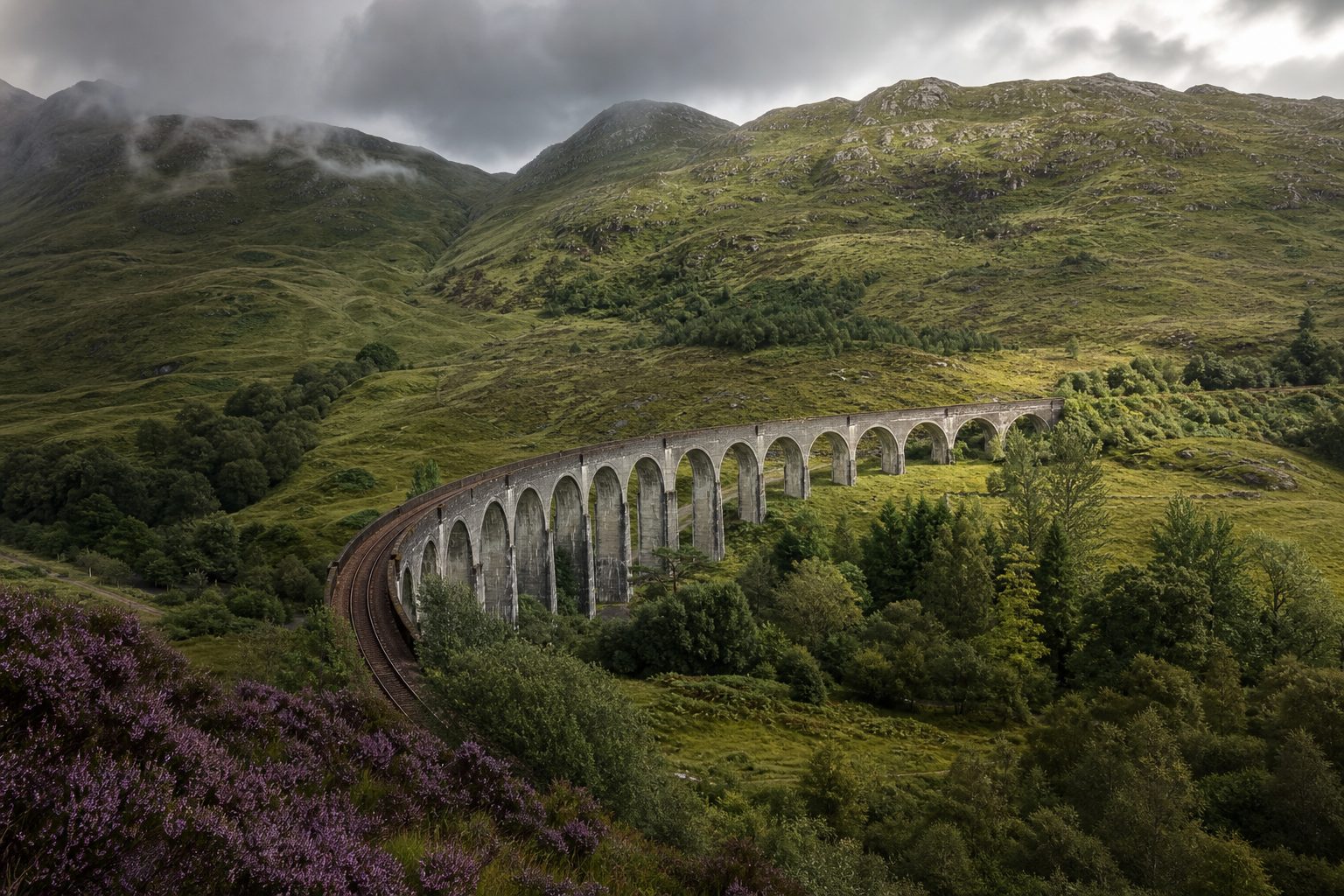 Scotland
Riding the rails through the Scottish Highlands
More moody northern weather, gladly.
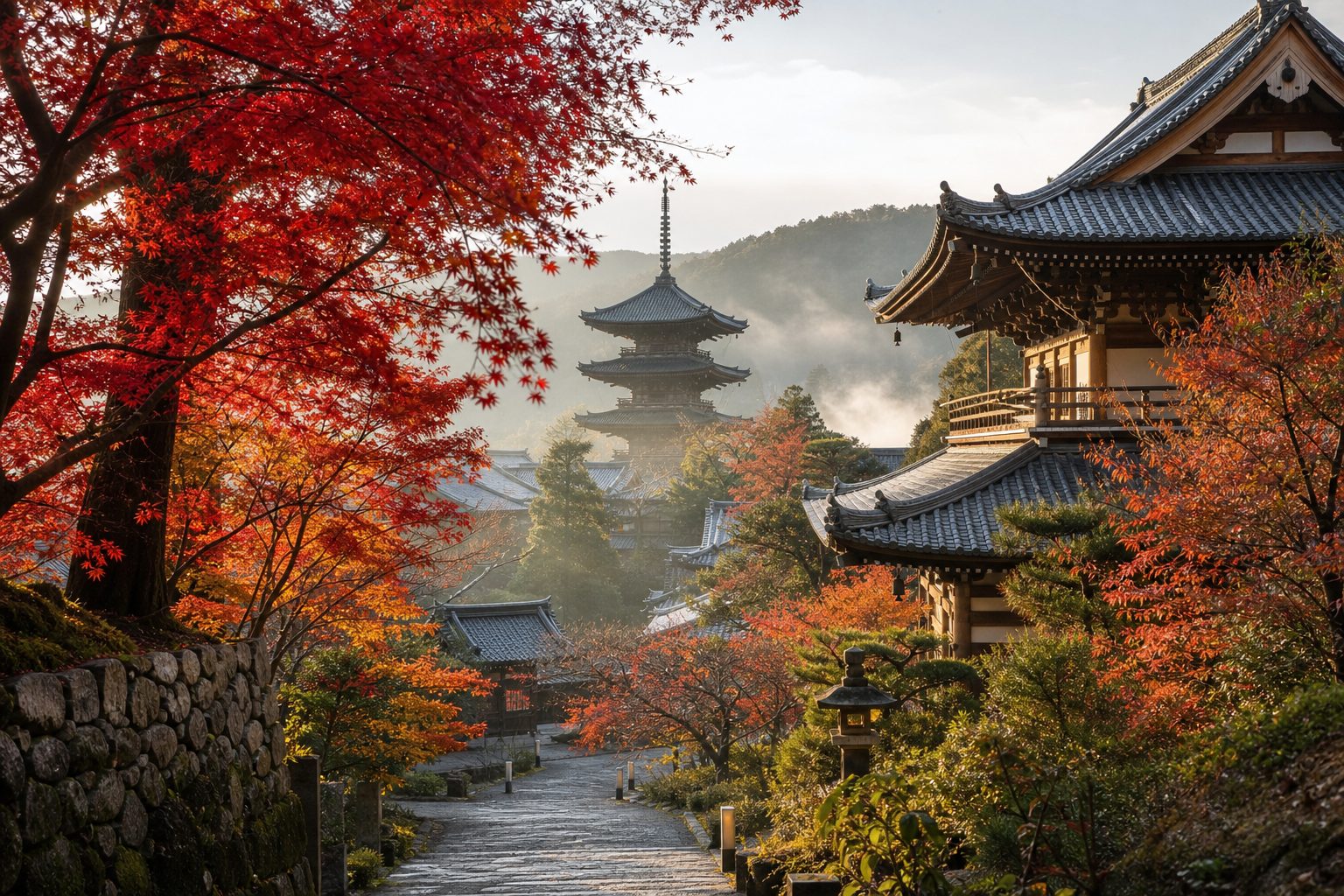 Japan
JapanWhy I fell for Japan in autumn
Another trip I almost talked myself out of.